Babel, Social Media, and the Architecture of Attention
Open a social feed and watch what it asks you to carry. A war, a joke, a confession, an advertisement, a fragment of Scripture, someone’s breakfast. Before an event has acquired weight, the next item has arrived. Everything is close; almost nothing stays long enough to be understood.
A person can become fluent in the appearance of conviction this way. Courage, faith, ambition, grief: each becomes a recognizable image, ready to circulate. The conduct those words demand takes considerably longer.
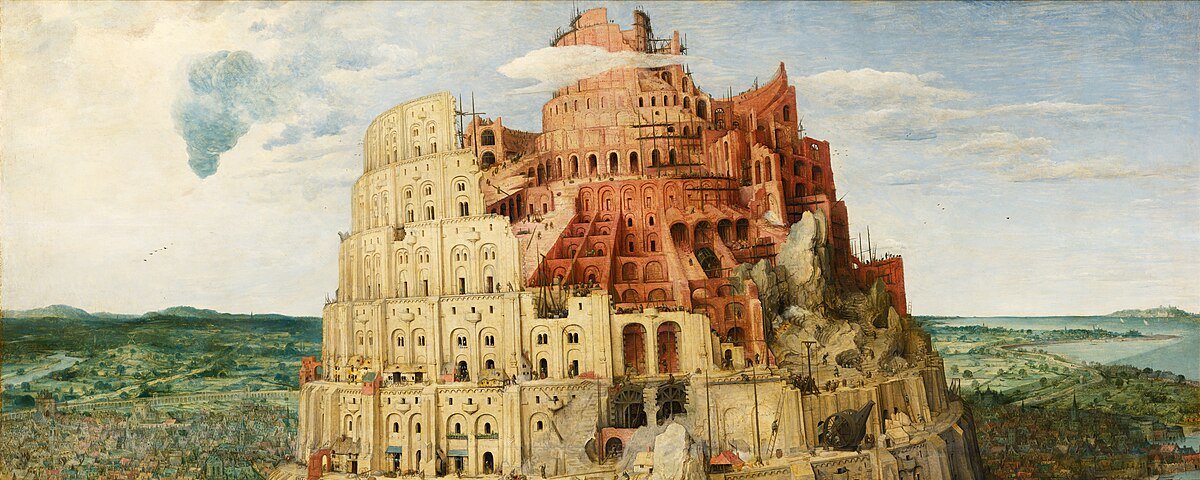
Babel offers a disturbing analogy. A collective project promises greatness and a name, yet ends in the loss of shared understanding. A communications system can expand the means of speaking while weakening the practices that let people hear one another.
A medium does not determine its use
The printing press provides an instructive comparison, although it should not be idealized. Printing helped texts circulate more widely, including vernacular Scripture, while also providing a means to spread competing doctrines, polemic, and misinformation. Wider access did not produce an uncomplicated agreement about truth.
Digital media inherit that ambiguity. They can make a library, a sermon, or an unfamiliar body of scholarship available to someone who would otherwise never encounter it. They can also organize those resources into a pattern of consumption that discourages sustained attention. The existence of good material does not establish that the surrounding experience helps people engage with it well.
Look at what a platform rewards people for doing with the material they encounter. Saving, rereading, comparing, and discussing a text are different activities from reacting to an isolated sentence. They require different amounts of time and produce different forms of understanding.
A medium’s effects cannot be explained entirely by the intentions of individual users. Interface choices shape the habits that become convenient. But users also make decisions about the forms of attention they practice and the communities to which they become accountable.
What is lost when a story becomes a posture
A sustained story places a person within consequences.
A character acts, encounters resistance, makes mistakes, and must live with what follows. That sequence matters because it prevents an attractive quality from remaining merely an image. Courage becomes intelligible through the cost of a decision; repentance through an acknowledgment of wrongdoing.
Online self-presentation can detach those qualities from their consequences. The appearance of an adventurous life becomes material for an audience. The language of conviction becomes a recognizable identity. Even the desire for spiritual seriousness can turn into a set of signals that ask little of the person displaying them.
Myth, fiction, and sacred narrative offer a different form of encounter. They offer more than references to quote. They provide forms through which to examine fear, loyalty, mortality, and responsibility. Their usefulness depends on a willingness to remain with a story beyond the part that flatters the reader.
The hero’s journey is one influential account of narrative, rather than a formula that explains every culture or every life. The larger possibility is that a story can make demands on its reader. It can expose the distance between an admired identity and the conduct required to inhabit it.
Reading beyond self-optimization
A shelf full of self-help books can reveal a narrow expectation of reading: every book must improve the person who bought it. Novels, dramas, and thrillers ask for a different commitment. Someone else’s life takes precedence for a while.
Advice has its place. An exclusive concern with improvement, however, can make other people appear only as examples of what to emulate or avoid. Fiction can resist that reduction. It asks the reader to remain with motives, relationships, and consequences that do not resolve into a technique.
Adventure, care, ambition, grief, and creation should not be assigned to readers according to gender. A person’s reading becomes narrower when those experiences are assigned in advance according to a demographic category.
A less instrumental relationship to narrative allows a book to justify its time without making its reader more efficient. Its value can lie in enlarging the range of lives that reader is capable of understanding.
A Christian account of attention
Attention is also a matter of spiritual formation. Attention shapes recurring habits, desires, and the capacity to recognize what is significant. A life organized around perpetual reaction leaves little room for prayer, examination, or the patient encounter with another person.
The soul is implicated in these habits. The danger is not exhausted by wasted time. It includes the possibility of becoming fluent in the signs of a meaningful life while remaining detached from the practices that sustain one.
Reclaiming narrative begins with ordinary decisions: reading a complete work, returning to a difficult passage, making something whose purpose survives its moment of publication, and allowing convictions to become obligations. A post can participate in that life, provided the life continues when there is nothing to post.
The task is to use the tools of the present without giving them final authority over the rhythm of attention. Stories deserve the time required to understand them. Faith deserves the conduct through which it is lived. Both ask more of a person than the ability to recognize and circulate their images.
Abel Paul George ·